1993 Chevrolet C1500 – Owen T.
OBS Tibbett: Building Something Worth Remembering
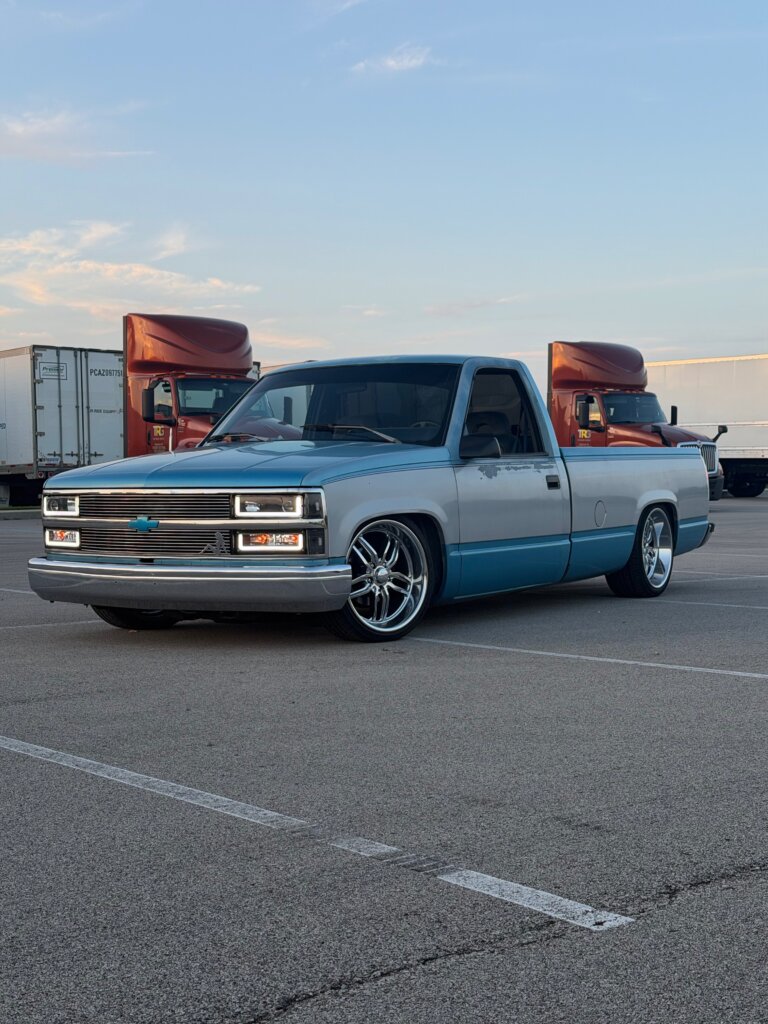
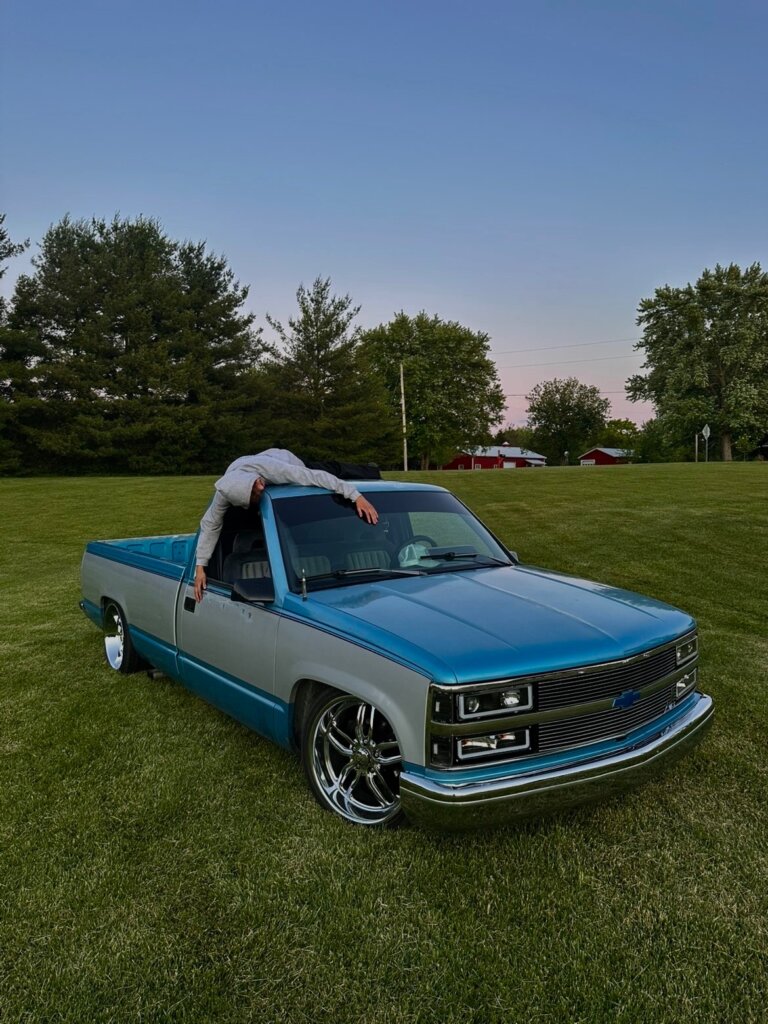
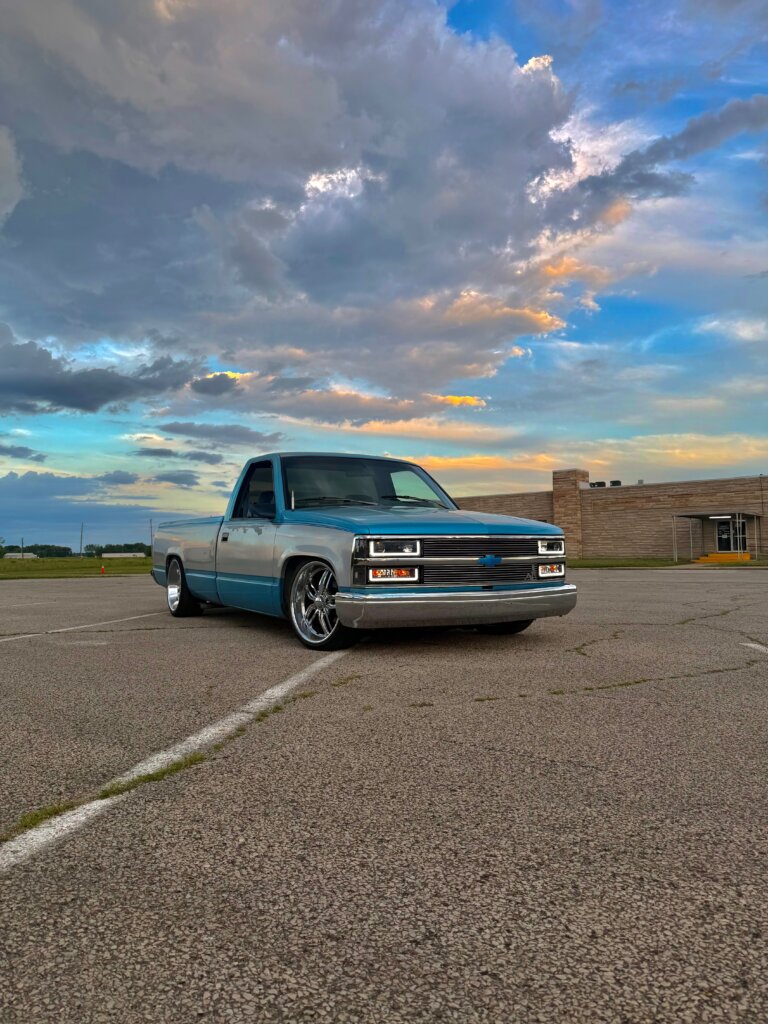
In February 2025, I bought a 1993 Chevrolet C1500 Silverado for $4,000. It was a two-wheel-drive, single-cab, eight-foot-long-bed truck powered by the original 305 small-block backed by a 4L60E automatic transmission. It wasn’t some pristine, low-mileage survivor, and it certainly wasn’t a finished show truck. It was an old OBS with faded, peeling blue-and-silver paint, plenty of character, and a whole lot of potential.
What started as buying an old Chevy eventually turned into something much bigger than I ever expected. This truck became a project I poured myself into, a reason to meet people in the truck community, and something that would eventually get attention from people and companies I had grown up looking up to.
The goal was never to build just another lowered truck. I wanted to build my truck.
Everybody has their own preferences, but there is something about a single-cab, long-bed C1500 that I have always loved. The proportions, the extra length, and the way it looks sitting low on the ground give it a character that a short-bed truck just doesn’t have for me. I wasn’t going to sacrifice that just to follow what was popular.
The truck’s original two-tone blue-and-silver finish was another thing I decided to embrace. The paint had seen better days, with fading, peeling, scratches, and the kind of wear that only comes with decades on the road. I could have chased a fresh paint job and tried to make the truck look brand-new, but the worn finish became part of its identity. I wanted to preserve that old-truck character rather than erase it.
The idea was to clean up what needed attention while leaving the patina and faded glory that made the truck mine. I even sourced a rust-free bed and fenders from a parts truck, along with a replacement driver-side fender, so I could address the areas that needed attention without turning the whole project into a complete cosmetic restoration. The rockers and cab corners were redone and painted to match the existing faded finish rather than stand out as freshly painted patches. It was about making the truck look right without making it look like it had just rolled out of a paint booth.
Getting It Down Where It Belonged
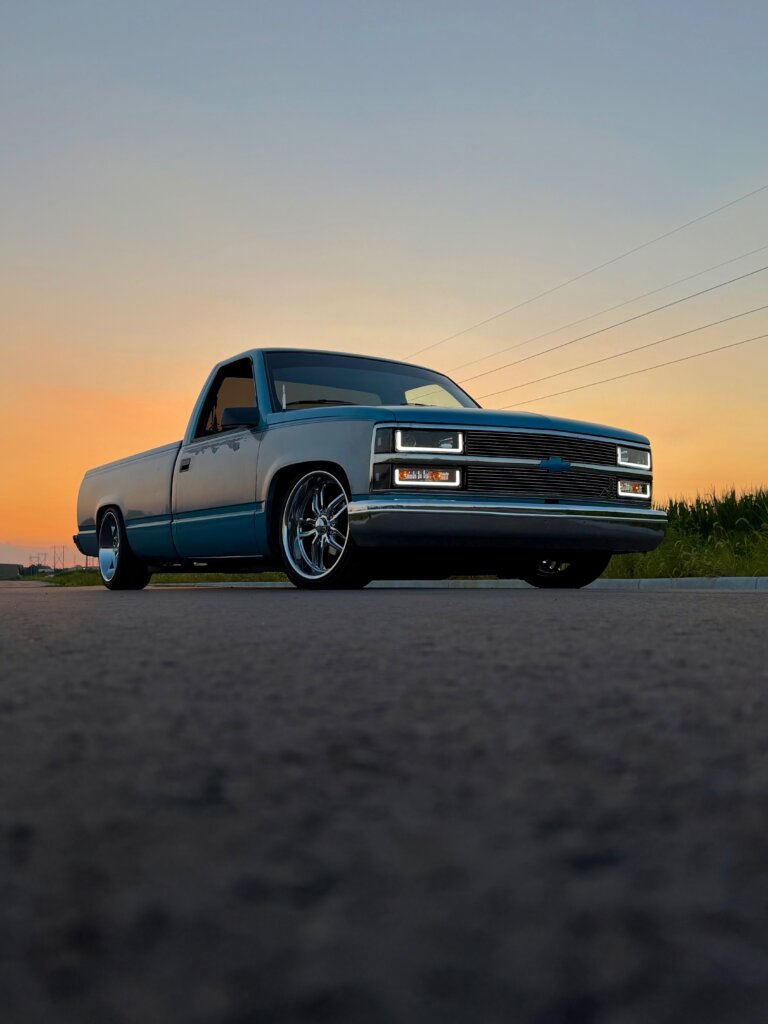
The biggest transformation came when I started working on the suspension. The truck originally sat on 15-inch wheels. There was nothing particularly unusual about its stance, but I knew that wasn’t where I wanted it to end up. I wanted it low enough to stand out immediately, with the wheels tucked into the body and the whole truck sitting with the kind of attitude you expect from a proper ’90s street truck.
I moved to a set of 20-inch US Mags. The larger wheels completely changed the truck’s proportions, especially with the long bed, and gave me the look I had been after without going overboard with wheel width or excessive poke.
The suspension setup involves drop control arms, drop spindles, and performance shocks up front, with a rear axle flip kit and lowering shackles in the back. The combination was intended to bring the truck down dramatically while retaining the overall character of the factory chassis. I ended up dropping it much lower than I initially intended, but I was really happy with the result.
For the frame work, I opted for a bolt-in C-notch rather than cutting and welding a notch myself. I had the body shop at the Chevrolet dealership where I work handle that part of the job. I was comfortable taking on much of the suspension and mechanical work, but I knew when a job called for equipment, experience, and a level of confidence I didn’t yet have. Having the professionals handle the frame modification was the right decision for me.
That decision reflects how the entire build has come together. I want to do as much as I can myself, but I also want the work done properly. There is no point in building a truck you love if you aren’t willing to take the time to do things right.
The truck ended up slammed, sitting lower than most of the OBS trucks I encountered at local shows. It has the kind of stance that makes people stop and look twice, especially when they realize it is a full-length, eight-foot-bed truck sitting that low.
Getting it to that point wasn’t simply a matter of installing parts and calling it finished. There were fitment considerations, clearance concerns, and the usual adjustments that come with lowering an older truck this far. The end result was the look I had envisioned: a long-bed OBS sitting aggressively low.
Eventually, I want the stance dialed in exactly where I envision it, with roughly five inches of drop up front and eight inches in the rear. The truck has already come a long way, but I still have things I want to refine. I don’t consider it a finished build simply because it gets attention.
There is always something to improve, something to repair, or some little detail that only you notice when you know your truck inside and out.
The 305, the Wrenches, and the Reality of an Old Truck
Under the hood, the truck still has its 305 TBI V8 and 4L60E automatic transmission. It isn’t some high-horsepower LS-swapped showpiece, and I haven’t built it around drag racing or chasing dyno numbers. I have always been drawn to the character of these older small-block Chevrolets, and I want the truck to retain that personality.
Of course, owning a thirty-three-year-old truck means dealing with the things that come with a thirty-three-year-old truck.
There have been mechanical issues, electrical frustrations, and plenty of parts to replace. I have dealt with starting problems, ignition-related issues, and the usual troubleshooting that comes with keeping an older vehicle on the road. A new ignition switch didn’t magically solve every electrical quirk, and even after replacing the starter, I found myself dealing with another starting issue.
The truck has also needed work on its emissions and engine-control systems. Replacing the EGR valve and its hose helped resolve a warm-running surge and stalling problem that I had been chasing with diagnostic equipment.
Those aren’t necessarily the glamorous parts of building a truck, but they are part of the story. Anybody can talk about wheels, stance, and paint. Keeping an old truck running while continuing to improve it is a different commitment.
Working at a GM dealership, I spend my days around vehicles, tools, parts, and people who know their way around a shop. That environment has helped me learn, make better decisions, and figure out where I can do the work myself and where it makes more sense to ask for help.
It has also meant that some of the money I earn goes right back into the truck. Between parts, shop work, suspension components, wheels, lighting, body repairs, and everything else, the original $4,000 purchase price became just the beginning.
By the time I accounted for the major work and the smaller purchases that add up along the way, I had invested well over $20,000 into the truck, and easily around $25,000 when I considered the entire build. That is a substantial amount of money for a young guy to put into an old pickup, but I never looked at it as simply buying transportation.
I was building something that meant something to me.
From My Garage to the Truck Community
One of the best parts of this entire experience has been seeing how other people respond to the truck.
When I first bought it, it was simply my project. I knew what I wanted it to become, but I had no idea how much attention it would eventually attract.
Once I got the truck lowered and started taking it out, the reactions became impossible to ignore. People would stop me at gas stations, compliment it through drive-through windows, approach me in parking lots, and ask questions about the suspension and the build. I have had people inquire about buying it, and I have had complete strangers go out of their way to tell me how much they like it.
One of the things I enjoy most is that people don’t just notice that it is lowered. They notice the truck itself. The long bed, the faded paint, the wheels, and the way everything comes together make it recognizable.
I have had truckers compliment it at gas stations, employees at restaurants tell me they like it, and people stop to talk when I am out driving. Those little interactions might not mean much to somebody else, but when you have spent countless hours and a serious amount of money building something, it feels good to know that other people appreciate it.
The truck has also given me opportunities to connect with people in the local automotive scene. I took it to Talladega Speedway for OBS Nationals, where I got to be around other owners who share the same appreciation for this generation of Chevrolet and GMC trucks. There is a difference between looking at pictures of a build on your phone and seeing it parked among other trucks in person. You start noticing the little things that make your own truck different, and you get to see how your work stacks up against what other people are building.
For a 17-year-old who started with a $4,000 pickup, those moments have been pretty incredible. The truck has reached people I never expected it to reach, and it has given me a reason to keep documenting the work and sharing the progress.
Why I Call It OBS Tibbett
At some point, the truck became more than just my 1993 C1500. It needed an identity of its own.
That is where the name OBS Tibbett comes in.
I wanted a name that was personal, recognizable, and tied directly to the truck. It wasn’t about giving it some over-the-top nickname. I wanted something simple that could become part of the truck’s identity as the build continued to evolve.
The name also represents the fact that this is an ongoing personal project. It isn’t a truck built by a large shop with an unlimited budget and a team of people handling every detail. It is a truck I bought, worked on, paid for, learned from, and continued to improve while holding down a job.
Every time I look at it, I see more than the paint, wheels, and suspension. I see the time spent figuring things out, the money saved and reinvested, the frustrations when something didn’t work, and the satisfaction of finally getting a part of the build right.
More Than Thirty Years Old, and Just Getting Started
When someone sees OBS Tibbett for the first time, I want them to see a proper old-school Chevrolet street truck. A two-wheel-drive, single-cab, eight-foot-bed C1500 with a 305 under the hood, US Mags filling the wheel openings, a dramatic drop, and faded two-tone paint that tells its own story.
I want them to notice that it is low without looking cartoonish, customized without losing its identity, and worn without looking neglected. I want them to appreciate the fact that the truck still looks like a truck from the era it came from.
But the part they can’t see just by walking around it is what makes it special to me.
They can’t see the hours spent working on it, the decisions about which parts to buy, the repairs that had to happen before the next modification, or the times I had to step back and figure out a better way to do something. They can’t see the money that went into it or the amount of learning that came along with every stage of the build.
They see the finished result of all those decisions, and that is exactly how it should be. A good truck tells its story without needing someone to stand next to it and explain every modification.
For me, OBS Tibbett is proof that you don’t need a brand-new truck, a six-figure build budget, or a professional shop to create something that people genuinely appreciate. You need a vision, the willingness to put in the work, and enough passion to keep going when the project gets frustrating.
I started with a $4,000 1993 Chevrolet C1500 Silverado. I kept the long bed, embraced the faded paint, changed the stance, added the details I liked, and continued working through the mechanical side of owning an old truck.
Somewhere along the way, that old Chevy became something people recognized.
And I am nowhere near finished with it.
This is OBS Tibbett. It’s a 1993 Chevy C1500 Silverado long bed, and it is a truck I built to be my own.